

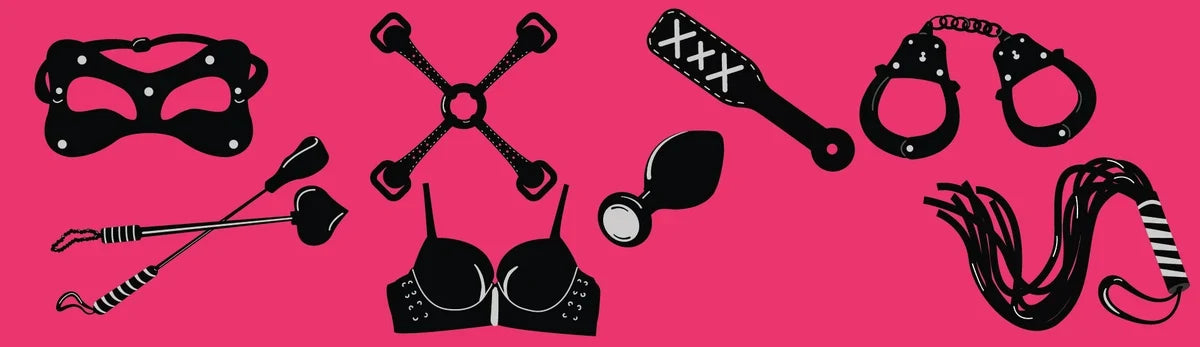
BDSM is often portrayed as mysterious, extreme, or intimidating. In reality, it is a broad umbrella term that includes many different consensual interests, relationship dynamics, and forms of adult expression.
Some people are interested in bondage. Others are drawn to power exchange, sensory experiences, roleplay, or the trust and communication involved. Many people are simply curious and want to understand what BDSM means without necessarily participating in it.
This beginner-friendly guide explains what BDSM stands for, where the term comes from, common myths, why some adults are interested in it, and why communication, consent, and trust are considered essential.
What Is BDSM?
BDSM is an acronym that describes several related categories of consensual adult interests and relationship dynamics. It does not refer to one single activity, lifestyle, or type of person.
The term may include bondage, discipline, dominance, submission, sadism, and masochism. However, someone can be interested in one category without being interested in the others.
For example, one person may enjoy the anticipation associated with restraints or sensory play but have no interest in power exchange. Another person may be curious about dominance and submission but not bondage.
BDSM interests exist on a spectrum. Some experiences are mild and occasional, while others may play a larger role in a person's relationships or identity.
Readers who want to understand the types of products commonly associated with the category can browse the Fascinations BDSM collection.
What Does BDSM Stand For?
The letters in BDSM represent overlapping categories. The acronym is commonly divided into three pairs: bondage and discipline, dominance and submission, and sadism and masochism.
Bondage
Bondage refers to the consensual restriction of movement. It may involve items such as cuffs, restraints, rope, or other accessories designed for that purpose.
People may be interested in bondage because of anticipation, trust, vulnerability, roleplay, or the feeling of temporarily giving up or taking control.
Explore examples in the Fascinations restraints and cuffs collection.
Discipline
Discipline refers to agreed-upon rules, structure, expectations, or consequences within a consensual dynamic.
The details vary between individuals and relationships. What defines healthy discipline is that expectations and limits are discussed and agreed upon in advance.
Dominance and Submission
Dominance and submission, often shortened to D/s, describe consensual power exchange between adults.
One person may take a more dominant role while another takes a more submissive role. These roles are based on agreement and do not remove anyone's right to communicate, set boundaries, or withdraw consent.
Sadism and Masochism
Sadism and masochism describe an interest in giving or receiving certain intense sensations within mutually agreed boundaries.
This category varies widely. Not everyone involved in BDSM enjoys pain, and many forms of BDSM do not involve pain at all.
BDSM Is an Umbrella Term
There is no requirement to identify with every part of the acronym. Many adults explore only one or two interests, while others simply learn about the topic without participating.
A Brief History of BDSM
The acronym BDSM became widely used during the late twentieth century, but the interests it describes are much older.
Historical artwork, literature, and personal writings from different cultures have included themes of restraint, power exchange, roleplay, and intense sensation for centuries.
During the twentieth century, organized communities began creating shared language around consensual kink and power exchange. Educational groups also developed frameworks that emphasized informed consent, communication, negotiation, and safety.
As public discussion became more common, BDSM increasingly became a subject of academic research in psychology, sociology, relationships, and human sexuality.
Today, BDSM is generally understood as one of many ways consenting adults may express intimacy, curiosity, identity, or relationship preferences.
Common BDSM Myths
Myth: BDSM Is Always Extreme
BDSM includes a wide range of interests. Some people prefer mild forms of sensory play, roleplay, restraint, or power exchange rather than intense experiences.
Myth: BDSM Is Only About Pain
Many BDSM interests do not involve pain. People may be more interested in trust, anticipation, sensation, communication, restraint, roleplay, or power dynamics.
Myth: BDSM Is the Same as Abuse
Consensual BDSM and abuse are not the same. Healthy BDSM requires informed consent, agreed boundaries, respect, and the ability for anyone involved to stop.
Abuse involves coercion, manipulation, threats, or harm without consent.
Myth: Only Certain People Are Interested in BDSM
People from many backgrounds, identities, professions, ages, orientations, and relationship styles may be interested in BDSM.
There is no single personality type or demographic that defines the BDSM community.
Myth: BDSM Requires Expensive Equipment
BDSM is not defined by the products someone owns. Communication and consent matter more than accessories or elaborate spaces.
Myth: Interest in BDSM Means Something Is Wrong
Curiosity about BDSM does not automatically indicate trauma, dysfunction, or an unhealthy relationship. Adult interests vary widely, and no single preference defines a person's overall well-being.
The Role of Consent, Communication, and Trust
Consent is one of the most important distinctions between healthy BDSM and abuse.
Informed consent means that the adults involved understand what is being discussed, participate voluntarily, and have the ability to decline or stop without pressure.
Consent should also be ongoing. Agreeing to one activity does not mean agreeing to everything, and anyone can change their mind.
Communication helps people clarify expectations and reduce misunderstandings. Depending on the relationship, these conversations may include:
- Personal interests and preferences
- Activities someone does not want
- Physical and emotional boundaries
- Relevant health or mobility considerations
- How someone prefers to communicate discomfort
- What emotional support may be helpful afterward
Trust develops when boundaries are respected consistently. A healthy dynamic should allow every person involved to ask questions, express uncertainty, and say no without fear of punishment, pressure, or embarrassment.
Consent Must Be Voluntary
Silence, hesitation, intoxication, fear, pressure, or a past agreement should never be treated as ongoing consent. Healthy participation requires clear communication and mutual respect.
Why Are Some People Interested in BDSM?
There is no single reason people become curious about BDSM. Motivations and experiences vary from person to person.
Common reasons may include:
- Trust: Some people value the level of openness and trust that consensual BDSM can require.
- Communication: Discussing desires and boundaries may help partners communicate more directly.
- Anticipation: Restraint, sensory changes, or roleplay can create a stronger sense of anticipation.
- Power exchange: Some adults enjoy temporarily taking or giving up control within an agreed dynamic.
- Self-expression: BDSM may provide a way to explore identity, fantasy, creativity, or confidence.
- Sensation: Some people enjoy experiences that heighten touch, sound, temperature, or other sensations.
- Emotional connection: Honest conversations about vulnerability and boundaries may create a stronger sense of intimacy.
For readers interested in understanding products associated with different sensations, Fascinations offers a curated sensory and impact collection.
Is BDSM Always Sexual?
No. BDSM may be sexual for some adults, but it is not always sexual.
Some people are primarily interested in the emotional, psychological, ritual, identity-based, or relationship aspects of BDSM. Others may participate in community discussions, educational events, or nonsexual power-exchange dynamics.
The meaning of BDSM depends on the people involved and the boundaries they establish.
Do You Need a Dedicated Space?
No. BDSM does not require a dungeon, elaborate furniture, or a dedicated room.
Specialized furniture and room accessories are available for adults who are interested in creating a particular environment, but they are not required in order to understand or identify with BDSM.
Those researching the types of furniture and accessories available can browse the Fascinations sex room collection.
Where Do Pumps Fit Within BDSM?
Pumps are generally categorized as enhancement or sensation products rather than being exclusive to BDSM.
Some adults may include them as part of a broader interest in sensation, body awareness, roleplay, or power dynamics. Others use pumps independently of BDSM.
Because these products have multiple uses and categories, interest in pumps does not automatically indicate an interest in BDSM.
Browse the Fascinations pumps collection to view the different styles available.
How Is BDSM Different From Kink or Fetish?
The words BDSM, kink, and fetish are related, but they do not mean exactly the same thing.
- Kink is a broad term for interests or activities that fall outside what a person or culture considers conventional.
- BDSM refers specifically to the categories of bondage, discipline, dominance, submission, sadism, and masochism.
- Fetish generally refers to a strong attraction to a particular object, material, body part, sensation, or scenario.
A person may have a kink without being interested in BDSM. Someone may enjoy BDSM without identifying a particular fetish. These terms can overlap, but they are not interchangeable.
Frequently Asked Questions About BDSM
What does BDSM stand for?
BDSM stands for bondage and discipline, dominance and submission, and sadism and masochism. The acronym represents several overlapping categories of consensual adult interests and dynamics.
Is BDSM the same as abuse?
No. Healthy BDSM is based on informed consent, communication, agreed boundaries, and mutual respect. Abuse involves coercion, manipulation, threats, or harm without consent.
Does BDSM always involve pain?
No. Many people are interested in restraint, anticipation, roleplay, sensory experiences, trust, or power exchange rather than pain.
Is BDSM always sexual?
No. BDSM can include sexual interests, but some people focus on emotional, psychological, relationship, identity, or community aspects instead.
Do you have to enjoy every part of BDSM?
No. BDSM is an umbrella term. Someone may be interested in one category while having no interest in the others.
Do you need special equipment?
No. BDSM is not defined by accessories or furniture. Products may support certain interests, but communication, consent, and trust are the foundation.
Why are people interested in BDSM?
People may be interested in BDSM because of trust, communication, anticipation, power exchange, creativity, sensation, identity, or emotional connection. Motivations vary between individuals.
Can someone learn about BDSM without participating?
Yes. Many people research BDSM because they are curious about the terminology, history, psychology, culture, or relationship dynamics.
Explore BDSM Products and Educational Resources
Understanding BDSM starts with reliable information, open communication, and respect for personal boundaries.
Explore the Fascinations BDSM collection, including restraints and cuffs, sensory and impact accessories, sex room furniture and essentials, and pumps.


